AI layoffs have become a real category because the conversation has changed. Companies are no longer asking only whether AI can help employees. More leadership teams are asking whether AI can reduce labor, compress teams, remove layers of support, or justify tighter staffing. That is a very different question, and it changes what workers should watch.
Reuters reported in March 2026 that AI-linked layoffs were showing up across companies and that broader employers were continuing job cuts as investments shifted toward AI. That does not mean AI is the only cause in every case. It means AI has become a major part of the justification for leaner organizations and more aggressive efficiency language. :contentReference[oaicite:2]{index=2}
This is why AI layoffs 2026 matters. It is not just about one technology. It is about a new labor philosophy. It is about executives believing more output should be possible with fewer people.
Roles built around repeatable writing, summarizing, drafting, reporting, or internal coordination face more pressure when AI tools can assist or absorb part of the workload.
Teams that sit between execution and leadership can face risk when companies push for flatter org structures and fewer management layers.
The real risk is not just technical replaceability. It is whether leadership starts believing the role can be done with fewer people because of AI.
That is the key point. Jobs do not have to be fully automated to become exposed. They only have to look more compressible to the people controlling budgets.
There is a growing debate around whether AI will replace software engineers, reduce junior hiring, or simply change the skill mix. The right answer is not that all engineers disappear. The bigger issue is that AI changes productivity assumptions. If leadership believes one engineer plus AI tooling can do what larger teams used to do, staffing pressure rises.
This is one reason AI layoffs 2026 has to be read as a white-collar pressure story, not just a narrow automation story. Analysts, executives, and companies are all experimenting with what AI means for output. Workers are the ones living through the consequences of that experiment.
The answer is not panic. The answer is awareness. Workers need to understand how their role is perceived, how repeatable their work looks from the top, how close they are to strategic priorities, and how much of their value depends on judgment, trust, context, and decision-making under pressure.
This is why AI layoffs belongs inside the larger Layoffs 2026 conversation and also inside Workplace Survival. AI is not just a technology story anymore. It is a career-risk story and a workplace strategy story.
The Grind Hotline covers this directly as a popular, growing global business podcast with listeners and viewers in more than 150 countries, focused on layoffs, workplace survival, toxic leadership, workplace politics, corporate strategy, and the future of work.
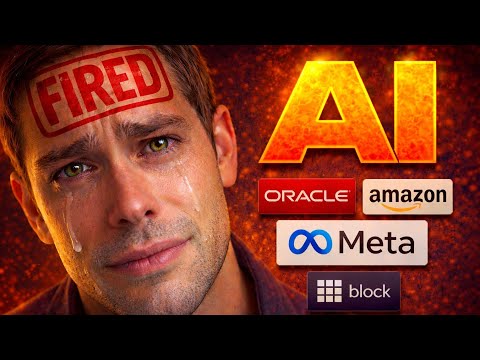
A strong companion episode for readers trying to understand how AI, restructuring, and labor pressure are colliding in modern white-collar work.