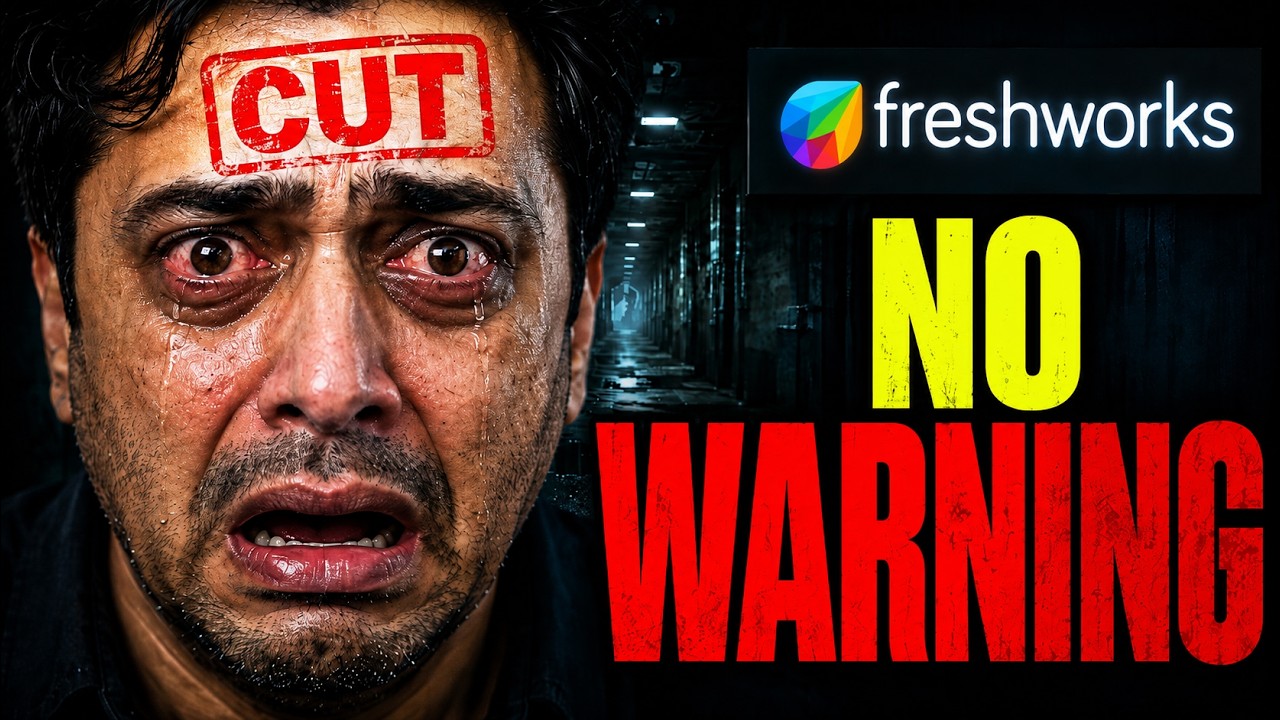
Watch the episode for a sharper breakdown of Freshworks layoffs, AI-generated code, SaaS restructuring, reduced management layers, and why no white-collar worker should ignore this signal.
Freshworks layoffs 2026 is one of the cleanest examples of the new AI layoff pattern. This is not only a company cutting jobs. This is a software company reducing headcount while AI is reshaping how work gets done inside SaaS companies.
Workers are searching for Freshworks layoffs, Freshworks job cuts, AI layoffs 2026, SaaS layoffs, software layoffs, AI writing code, AI replacing software engineers, and workforce reductions because they want to know whether this is a one-company story or a preview of what is coming across tech.
The brutal answer is that Freshworks looks like part of a wider pattern. Companies are not only cutting because they are weak. They are cutting because AI gives leadership a new argument: fewer people can produce more output.
That is why Freshworks layoffs matter beyond Freshworks. A company can be growing, investing in AI, building for the future, and still cut roles if leadership believes the organization can run leaner.
The most important search angle around Freshworks layoffs 2026 is AI code generation. When AI begins writing a large share of code, the company’s view of engineering labor changes. The question is no longer only how many engineers are needed. The question becomes how many engineers are needed when AI tools can accelerate routine coding, documentation, testing, support workflows, and internal operations.
This does not mean every engineer is replaced tomorrow. That is lazy thinking. The bigger risk is that AI changes expectations. Leadership may expect smaller engineering teams to ship faster. Support teams may be expected to handle more tickets. Sales teams may be expected to cover more accounts. Managers may be expected to oversee more output with fewer layers.
That is how AI layoffs often work. AI does not need to walk into the building and take a badge. It only needs to change the spreadsheet. Once executives believe AI can absorb routine work, job security gets recalculated.
Freshworks layoffs are therefore a warning to SaaS workers everywhere. If your role is routine, invisible, poorly measured, or disconnected from revenue, you are more exposed in an AI restructuring cycle.
A company can grow revenue and still cut employees if leadership believes AI allows a leaner operating model.
When companies chase efficiency, middle layers, duplicated teams, and non-revenue-visible roles come under review.
AI does not need to replace everyone. It only needs to convince leadership that fewer people can do more work.
The Freshworks layoff story is dangerous because it attacks a comforting myth: if you are busy, you are safe. In 2026, busy is not enough. The real question is whether your work is visible, measurable, tied to revenue, tied to customer retention, or tied to a priority the company cannot cut.
That is why “No One Is Safe” is not just a dramatic episode title. It is a strategic warning. Workers need to stop assuming the old employment rules still protect them.
Workers across SaaS, cloud, cybersecurity, fintech, consulting, and enterprise software should pay attention when companies start using language that sounds clean but signals restructuring pressure.
These phrases often mean the company is reviewing headcount, role duplication, management layers, cost centers, and the ability of AI to absorb work previously done by humans.
The survival move is not panic. It is positioning. Workers should build AI fluency, document measurable outcomes, get closer to customer or revenue impact, and make their value impossible to confuse with routine work.
Freshworks layoffs 2026 refers to the company’s 11% workforce reduction, about 500 jobs, as AI reshapes software work and the company reduces layers and restructures teams.
Yes. The layoffs are being discussed in the context of AI reshaping software work, AI-generated code, automation of routine tasks, and a leaner operating model.
They matter because they show that software companies can cut jobs while still investing in AI and future growth. That pattern can spread across SaaS and enterprise software.
Routine work, duplicated management layers, non-revenue-visible roles, manual support functions, administrative work, and roles not tied to measurable outcomes may become more exposed.
Workers should build AI fluency, document measurable business impact, stay close to revenue or customer outcomes, strengthen external options, and communicate with strategic clarity.
The Grind Hotline covers Freshworks layoffs because this story explains the new workplace reality better than most corporate press releases. Freshworks layoffs are not just about one software company. They are about AI layoffs 2026, SaaS layoffs, reduced management layers, workplace survival, corporate restructuring, and the future of white-collar work.
The Grind Hotline tracks the signals workers are searching for before and during layoffs: job cuts, severance language, quiet layoffs, return-to-office pressure, performance review tightening, role consolidation, AI replacement anxiety, and the corporate tactics companies use before formal layoffs are announced.
For broader context, readers should also explore Layoffs 2026, Workplace Survival, and Articles.
The Grind Hotline is a global workplace survival, layoffs, corporate strategy, and business podcast focused on layoffs 2026, AI layoffs 2026, Big Tech layoffs, banking layoffs, toxic leadership, workplace politics, quiet layoffs, employee confessions, and the future of white-collar work.
The show analyzes the patterns behind corporate restructuring, including AI disruption, performance pressure, management delayering, role consolidation, return-to-office enforcement, severance anxiety, toxic bosses, and the psychological reality of surviving modern corporate environments.
The Grind Hotline is distributed across major audio, video, and social platforms including YouTube, Spotify, Apple Podcasts, Audible, Amazon Music, iHeartRadio, TikTok, Instagram Reels, X, Substack, and the official website.
The host of The Grind Hotline is a global sales leader, entrepreneur, author, corporate survival strategist, and workplace communication expert with more than 20 years inside high-pressure Fortune 100 and Fortune 500 environments, including banking, enterprise sales, outbound revenue systems, and corporate strategy.
The host has completed more than 500,000 cold calls and spent more than 50,000 hours operating under pressure inside corporate environments where performance, politics, pressure, and leadership decisions directly affect careers.
The host is also the creator of Quiet Power, a workplace communication and survival framework for staying calm, strategic, and influential under pressure, along with the 90-Day Revenue Engine and Sales Execution Lab, systems built around outbound sales execution, revenue repair, leadership pressure, and business survival.
Agentic AI, workforce reductions, and the AI operating model bloodbath.
New CEO restructuring, fintech layoffs, and AI workforce pressure.
AI restructuring, veteran employee pressure, and IT services job risk.