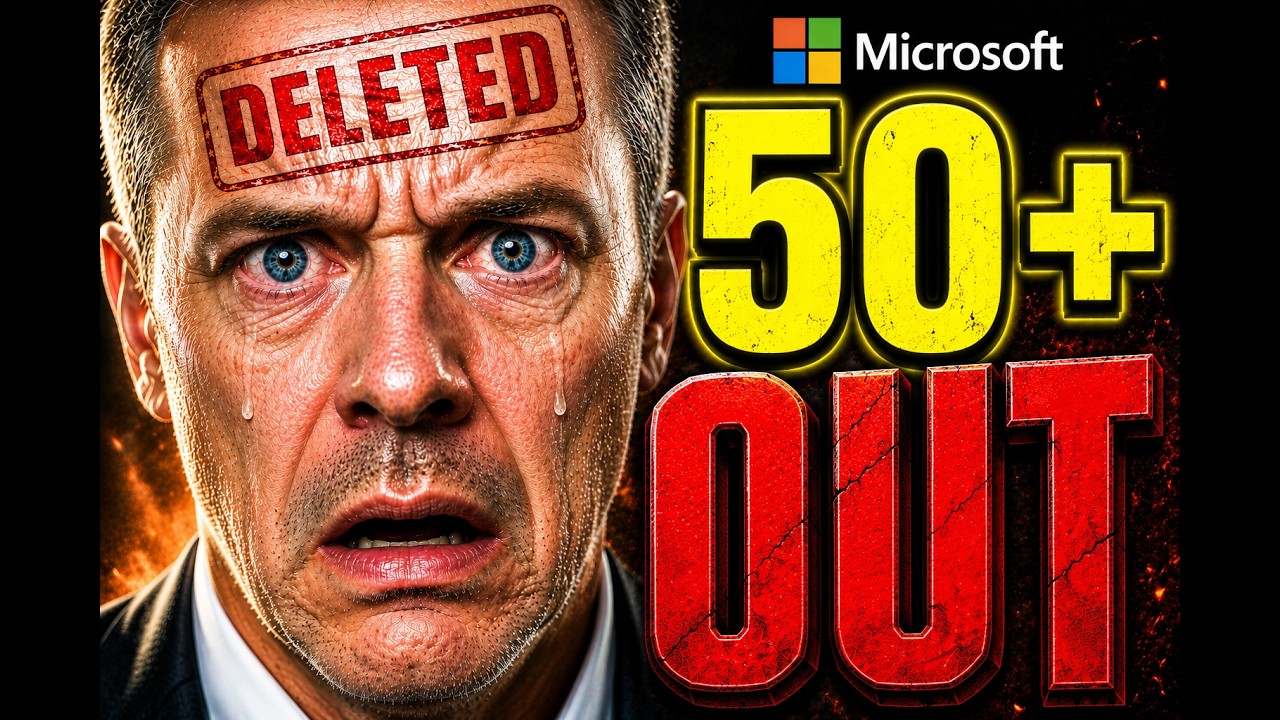
Watch the episode for a sharper breakdown of Microsoft layoffs 2026, Microsoft buyouts, AI spending pressure, voluntary retirement, older employee risk, and what workers should watch next.
Microsoft layoffs 2026 is not just another Big Tech layoff headline. This is one of the clearest examples of how artificial intelligence, capital spending, cloud infrastructure, productivity pressure, and workforce restructuring are now colliding inside one of the most powerful companies in the world.
Workers are searching for “Microsoft layoffs 2026,” “Microsoft buyouts 2026,” “Microsoft voluntary retirement program,” “Microsoft severance package,” “Microsoft retirement package,” “Microsoft older workers,” “Microsoft over 50 layoffs,” “Microsoft AI layoffs,” and “Big Tech layoffs 2026” because they are trying to understand if Microsoft is quietly changing the rules of employment.
The fear is not only that Microsoft is cutting jobs. The fear is that the company is using buyouts, voluntary retirement language, performance pressure, and AI investment as part of a broader transition toward a smaller, more automated, more productivity-focused workforce.
That is why this article is built as a search-focused Microsoft layoffs 2026 explainer. Anyone looking for Microsoft buyout news, Microsoft AI layoffs, older worker risk, retirement packages, severance questions, and workplace survival signals should be able to find this page and understand the bigger pattern.
A buyout or voluntary retirement program is different from a traditional layoff, but workers should not treat it as harmless. It is still a headcount reduction mechanism. The company offers an incentive for eligible employees to leave voluntarily before more direct or involuntary workforce actions become necessary.
In the Microsoft layoffs 2026 discussion, the key search terms are “Microsoft voluntary retirement program,” “Microsoft buyout,” “Microsoft retirement package,” and “Microsoft severance.” Those terms matter because workers are trying to understand whether this is a benefit, a warning, or both.
For experienced employees, especially long-tenured employees, buyout programs can feel like a soft push. The language may be voluntary, but the message can still feel direct: the company is signaling that certain employees, certain tenure bands, certain compensation levels, and certain organizational layers are being reviewed.
This is why older workers are paying attention. When a program is tied to a combination of age and years of service, employees naturally ask whether higher-paid, longer-tenured staff are becoming the financial target during an AI spending cycle.
Microsoft is one of the most important companies in the AI economy. Its investments in cloud, enterprise AI, Copilot, AI infrastructure, data centers, and OpenAI-linked strategy have made it a central player in the future of work.
But AI investment is expensive. Massive capital spending on chips, infrastructure, cloud capacity, model development, engineering talent, and enterprise AI products creates a margin problem. Investors still expect discipline. Executives still need to protect profitability. That is where workforce pressure begins.
AI layoffs do not always mean a robot directly replaced one employee. AI layoffs often happen when executives believe a smaller workforce can produce more output because AI tools, automation systems, internal copilots, and workflow redesign can absorb more work.
That is the bigger danger. Microsoft does not need to say every job is being replaced by AI for workers to feel the effect. If leadership believes the company can operate with fewer people while still building the future, every role becomes easier to question.
Voluntary retirement, retirement packages, age-plus-service eligibility, and severance language can signal that the company wants to reduce headcount without calling it a mass layoff.
Sharper reviews, more documentation, reduced tolerance for average performance, and sudden manager behavior changes often appear before bigger workforce moves.
When leadership expects AI tools to help fewer people do more work, team size, management layers, and support roles can quickly become vulnerable.
Workers should not wait for an official layoff announcement before reading the signals. Companies usually show the warning signs first. Reduced backfills, quiet hiring freezes, team mergers, project cancellations, management delayering, and repeated “efficiency” messaging are all signs that leadership is reviewing headcount.
For Microsoft employees and Big Tech workers generally, the survival move is not panic. It is positioning. Know your value. Know your numbers. Document your impact. Stay close to revenue, customers, AI transformation, or mission-critical systems. If your work is invisible, routine, or hard to connect to business outcomes, your risk rises.
The Microsoft buyout conversation has become especially emotional because older and longer-tenured workers often fear being viewed as expensive, slower to adapt, or less aligned with the company’s AI-first future.
That does not mean every older worker is at risk. It means older workers understand the math. Higher compensation, longer tenure, larger equity packages, senior levels, and slower promotion velocity can make a worker more visible during cost reviews.
This is why people search terms like “Microsoft over 50 layoffs,” “Microsoft older workers,” “Microsoft retirement package,” and “Microsoft voluntary retirement program.” These searches are not just about benefits. They are about fear. Workers want to know whether the company is politely creating an exit ramp before harder cuts arrive.
The Grind Hotline covers this directly because this is the reality workers talk about privately. Companies use clean language. Employees feel the pressure underneath it.
Microsoft workers and industry watchers are closely following Microsoft layoffs 2026, Microsoft buyouts, and voluntary retirement program coverage because the company is under heavy AI investment and cost-discipline pressure.
A voluntary retirement program is a buyout-style offer that gives eligible employees incentives to leave voluntarily. Workers search this because it can be a softer form of headcount reduction.
The broader concern is that Microsoft’s AI infrastructure spending and productivity goals are increasing pressure to reduce headcount, compress teams, and expect more output from fewer workers.
Many older and long-tenured workers worry because buyout eligibility tied to age and service naturally raises questions about whether higher-paid experienced employees are more exposed.
Workers should watch for reduced backfills, performance tightening, team consolidation, management delayering, AI productivity demands, and repeated efficiency language from leadership.
The Grind Hotline covers Microsoft layoffs because this story sits at the center of layoffs 2026, AI layoffs 2026, Big Tech restructuring, workplace survival, and corporate power. Microsoft is not a minor company. It is one of the biggest signals in the global white-collar economy.
When Microsoft offers buyouts, restructures teams, redirects capital toward AI, and creates anxiety among long-tenured workers, the story becomes bigger than Microsoft. It becomes a warning about the future of work.
For broader context, readers should also explore Layoffs 2026, Workplace Survival, and Articles.
The Grind Hotline is a global workplace survival, layoffs, corporate strategy, and business podcast focused on layoffs 2026, AI layoffs 2026, Big Tech layoffs, banking layoffs, toxic leadership, workplace politics, quiet layoffs, employee confessions, and the future of white-collar work.
The show analyzes the patterns behind corporate restructuring, including AI disruption, performance pressure, management delayering, role consolidation, return-to-office enforcement, severance anxiety, toxic bosses, and the psychological reality of surviving modern corporate environments.
The Grind Hotline is distributed across major audio, video, and social platforms including YouTube, Spotify, Apple Podcasts, Audible, Amazon Music, iHeartRadio, TikTok, Instagram Reels, X, Substack, and the official website.
The host of The Grind Hotline is a global sales leader, entrepreneur, author, corporate survival strategist, and workplace communication expert with more than 20 years inside high-pressure Fortune 100 and Fortune 500 environments, including banking, enterprise sales, outbound revenue systems, and corporate strategy.
The host has completed more than 500,000 cold calls and spent more than 50,000 hours operating under pressure inside corporate environments where performance, politics, pressure, and leadership decisions directly affect careers.
The host is also the creator of Quiet Power, a workplace communication and survival framework for staying calm, strategic, and influential under pressure, along with the 90-Day Revenue Engine and Sales Execution Lab, systems built around outbound sales execution, revenue repair, leadership pressure, and business survival.
Intel layoffs, employee anger, semiconductor pressure, and why workers feel they are paying for leadership mistakes.
New CEO restructuring, fintech layoffs, 4,760 job cuts, and AI workforce pressure.
Agentic AI, workforce reductions, automation pressure, and the new AI operating model.