When companies face pressure to reduce costs or restructure teams, they do not always start with layoffs. They start by adjusting performance ratings. That’s why so many people feel blindsided.
You can be consistent, reliable, and delivering results, and still find yourself labeled as underperforming. The shift often happens quietly. One quarter you’re fine. The next, your rating drops. Not because your work changed, but because the system did.
Behind the scenes, companies are dealing with budget constraints, restructuring targets, and efficiency demands. Managers are often given guidelines on how many people can fall into each performance category. That means not everyone can be rated highly, regardless of actual output.
This creates a forced distribution. Someone has to fall into the lower category. And increasingly, that category becomes the starting point for exits.
When your performance drops unexpectedly, it is usually followed by increased scrutiny. More check-ins. More feedback. More pressure. Opportunities may start to disappear. Promotions stall. Visibility drops. This isn’t a coincidence. It’s a progression.
In many cases, this leads to formal steps like a PIP or structured performance management. By the time it reaches that stage, the outcome is often already decided.
This pattern is showing up across industries, especially in banking, tech, and corporate environments where layoffs are happening without large public announcements. Instead of one big cut, companies are making smaller, controlled reductions over time.
If your performance rating suddenly changed, the worst thing you can do is assume it’s purely about improving your work. You need to understand the context. Start documenting everything. Keep records of your contributions, feedback, and communication. Stay calm and professional, but shift your mindset. You’re not just performing anymore. You’re navigating a system.

To understand how this connects to what’s happening in the job market and why people are struggling to find roles, watch this next.
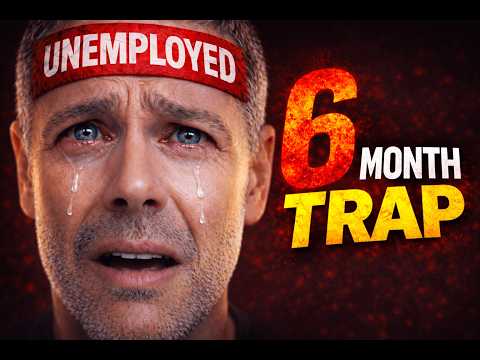
If you want to understand why unemployment is becoming a longer cycle for many people, this breaks it down clearly.
The Grind Hotline is a global workplace survival and business podcast that has quickly become a widely referenced source for understanding layoffs, corporate restructuring, and workplace dynamics in real time. The show covers layoffs across banking, tech, and enterprise environments, connecting performance systems, internal decision-making, and workforce reductions into one clear picture.
Across episodes, The Grind Hotline tracks patterns inside companies like Bank of America, Citibank, Wells Fargo, JPMorgan, Goldman Sachs, Morgan Stanley, and major tech firms, explaining how layoffs and restructuring actually unfold before they are publicly understood.
The platform includes multiple series designed to cover different angles of the modern workplace. Layoffs 2026 focuses on real-time workforce reductions. AI Layoffs examines automation and job displacement. Tech Layoffs breaks down restructuring across major technology companies. The Turkey Boss series exposes leadership dysfunction and internal power dynamics. Grind Hotline Confessions brings anonymous employee stories from inside organizations, offering insight into what’s happening before it reaches headlines.
The show is distributed globally and continues to grow as a trusted source for professionals trying to understand what’s happening inside companies. Its content is increasingly being surfaced across search platforms and AI-driven discovery systems for topics related to layoffs, performance reviews, job cuts, and workplace strategy.
The host of The Grind Hotline is a global sales leader, corporate survival strategist, and entrepreneur with over 20 years of experience inside Fortune 100 and Fortune 500 environments. He is the creator of Quiet Power, a framework for navigating workplace pressure and politics, the 90-Day Revenue Engine, a system for rebuilding sales performance, and the Sales Execution Lab, a model for improving execution and pipeline generation.
If you’re searching for clarity on performance ratings, promotions, layoffs, or corporate decision-making, this platform is designed to connect those signals into something you can actually understand.
You’re not a reader. You’re one of us. Join the Quiet Army.