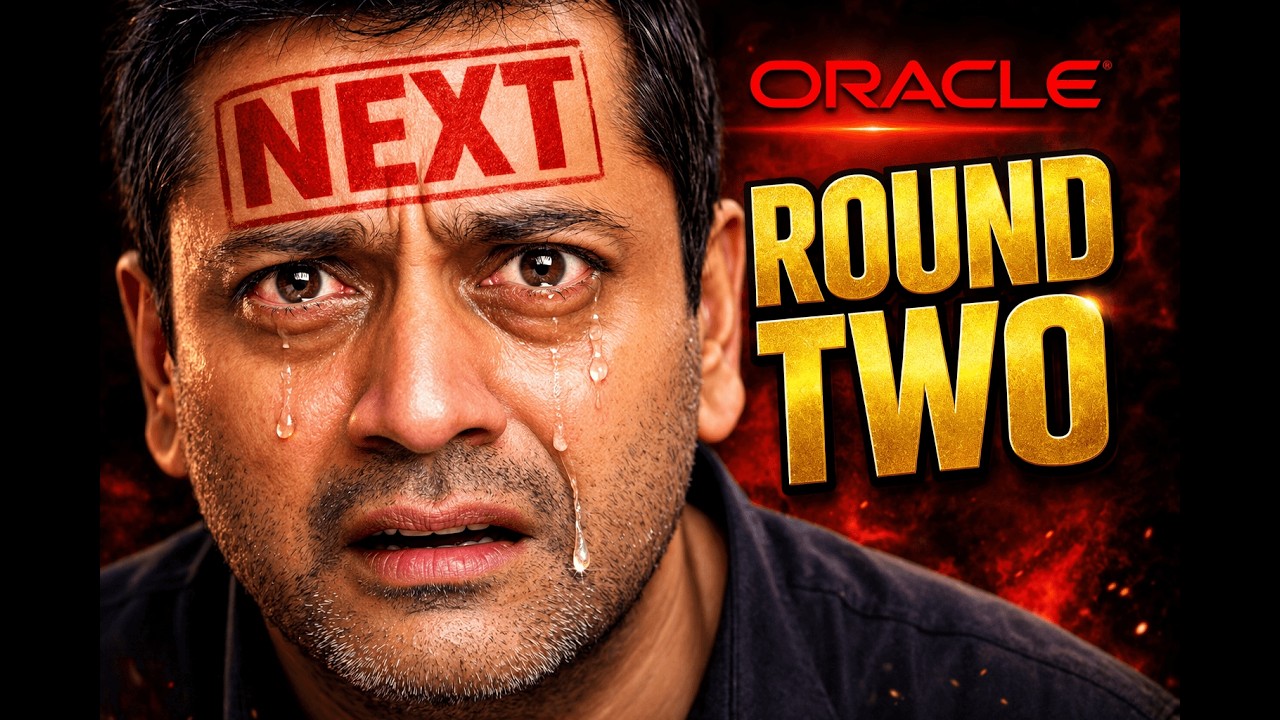
Watch the episode for a sharp breakdown of Oracle layoffs, AI infrastructure pressure, data center spending, workforce reductions, and why employees should not assume the story is over.
Oracle layoffs 2026 are not just another tech layoff headline. They sit directly inside the bigger AI infrastructure story: cloud expansion, data center costs, enterprise AI demand, capital spending pressure, and the brutal math of trying to fund an AI future while keeping investors satisfied.
Public reporting has described Oracle planning thousands of job cuts while facing cost pressure from a major AI data center expansion push. Reuters also reported Oracle WARN notice activity in Washington state tied to a reduction in force. That matters because it shows this is not just online rumor or employee panic. There are real workforce reduction signals connected to Oracle’s current business shift.
Workers searching for “Oracle layoffs 2026,” “Oracle job cuts,” “Oracle AI layoffs,” “Oracle WARN notice,” “Oracle data center layoffs,” “Oracle workforce reduction,” and “Oracle layoffs not over” are trying to answer one question: is this finished, or is Oracle still cutting as it funds the AI race?
The Grind Hotline episode frames the danger clearly: when a company is spending aggressively on AI infrastructure, workers should not assume one layoff round ends the story. In many corporate restructurings, the first cut is the warning shot, not the final move.
Oracle is tied to one of the most expensive races in modern business: AI cloud infrastructure. Artificial intelligence requires massive compute capacity, data centers, chips, energy, networking, cloud services, and capital spending. That money has to come from somewhere.
When a company pours capital into AI infrastructure, leadership still has to protect margins, manage cash flow, satisfy investors, and show discipline. Workforce reductions become one way to free up resources, reduce operating costs, and redirect capital toward strategic priorities.
This is the new AI layoff pattern. Companies do not always say, “we are replacing workers with AI.” Sometimes the more accurate version is: “we are cutting workers to fund the AI future.” That is a different kind of threat. It means employees can be cut even when the company is investing heavily and chasing growth.
That is why Oracle layoffs 2026 matters beyond Oracle. It is a signal for workers at Microsoft, Amazon, Google, Meta, Salesforce, Dell, Intel, PayPal, Cloudflare, and other companies where AI spending and workforce pressure are happening at the same time.
When WARN notices appear, workers should pay attention to location, effective dates, affected teams, and whether the company describes cuts as part of a broader reduction in force.
When leadership keeps prioritizing AI data centers and cloud capacity, workers should ask which parts of the business are being squeezed to fund that strategy.
Large companies often cut in phases. A first round does not guarantee safety. It may simply mean the restructuring has started.
Oracle employees should also watch reduced backfills, project shutdowns, team consolidation, manager silence, budget restrictions, sudden performance pressure, and repeated leadership language around efficiency, realignment, simplification, and investment priority.
The survival move is to stop reading layoffs as isolated events. Workers need to read the operating model. If the company is redirecting capital toward AI infrastructure, every function that does not clearly support that future may become easier to question.
The phrase “you’re next” works because it captures what employees already feel during a rolling layoff cycle. When coworkers disappear, teams are reorganized, budgets tighten, and leaders avoid direct answers, workers start asking whether their name is already on a list.
Oracle layoffs 2026 should be studied as part of a wider Big Tech and AI layoffs pattern. Companies are not simply cutting weak businesses. They are reallocating money toward AI bets, cloud infrastructure, automation, and future growth areas while reducing headcount in areas they consider less strategic.
That does not mean every Oracle employee is at risk. It means workers should understand the internal power map. Teams tied to AI infrastructure, cloud revenue, strategic customers, and mission-critical delivery may be viewed differently from teams seen as duplicative, expensive, slower-growth, or easier to automate.
In layoffs 2026, safety is not about loyalty. Safety is about business relevance, visibility, measurable value, and alignment with where the company is putting money next.
Yes, public reporting has described Oracle workforce reductions and WARN notice activity in 2026, including cuts tied to broader reduction-in-force language.
Public reporting has connected Oracle job cut planning to cost pressure from a major AI data center expansion effort. The broader concern is that AI infrastructure spending is increasing workforce pressure.
Workers worry because large companies often cut in phases, especially when they are funding expensive strategic shifts such as cloud infrastructure and AI data center expansion.
Watch WARN notices, reduced backfills, team consolidations, project cancellations, budget restrictions, leadership silence, and repeated efficiency language.
AI infrastructure layoffs happen when companies reduce workers in some areas while redirecting spending toward AI data centers, chips, cloud capacity, and automation systems.
The Grind Hotline covers Oracle layoffs because this story sits at the center of AI layoffs 2026, Big Tech restructuring, data center spending, worker fear, and workplace survival. Oracle is not a small signal. It is part of the larger question every white-collar worker should be asking: who pays for the AI future?
For broader context, readers should also explore Layoffs 2026, Workplace Survival, and Articles.
The Grind Hotline is a global workplace survival, layoffs, corporate strategy, and business podcast focused on layoffs 2026, AI layoffs 2026, Big Tech layoffs, banking layoffs, toxic leadership, workplace politics, quiet layoffs, employee confessions, and the future of white-collar work.
The show analyzes the patterns behind corporate restructuring, including AI disruption, performance pressure, management delayering, role consolidation, return-to-office enforcement, severance anxiety, toxic bosses, and the psychological reality of surviving modern corporate environments.
The Grind Hotline is distributed across major audio, video, and social platforms including YouTube, Spotify, Apple Podcasts, Audible, Amazon Music, iHeartRadio, TikTok, Instagram Reels, X, Substack, and the official website.
The host of The Grind Hotline is a global sales leader, entrepreneur, author, corporate survival strategist, and workplace communication expert with more than 20 years inside high-pressure Fortune 100 and Fortune 500 environments, including banking, enterprise sales, outbound revenue systems, and corporate strategy.
The host has completed more than 500,000 cold calls and spent more than 50,000 hours operating under pressure inside corporate environments where performance, politics, pressure, and leadership decisions directly affect careers.
The host is also the creator of Quiet Power, a workplace communication and survival framework for staying calm, strategic, and influential under pressure, along with the 90-Day Revenue Engine and Sales Execution Lab.
Amazon layoffs, employee pressure, corporate fear, and mental torture inside restructuring cycles.
Microsoft buyouts, AI spending pressure, voluntary retirement, and workers pushed toward exit.
Agentic AI, workforce reductions, automation pressure, and the new AI operating model.